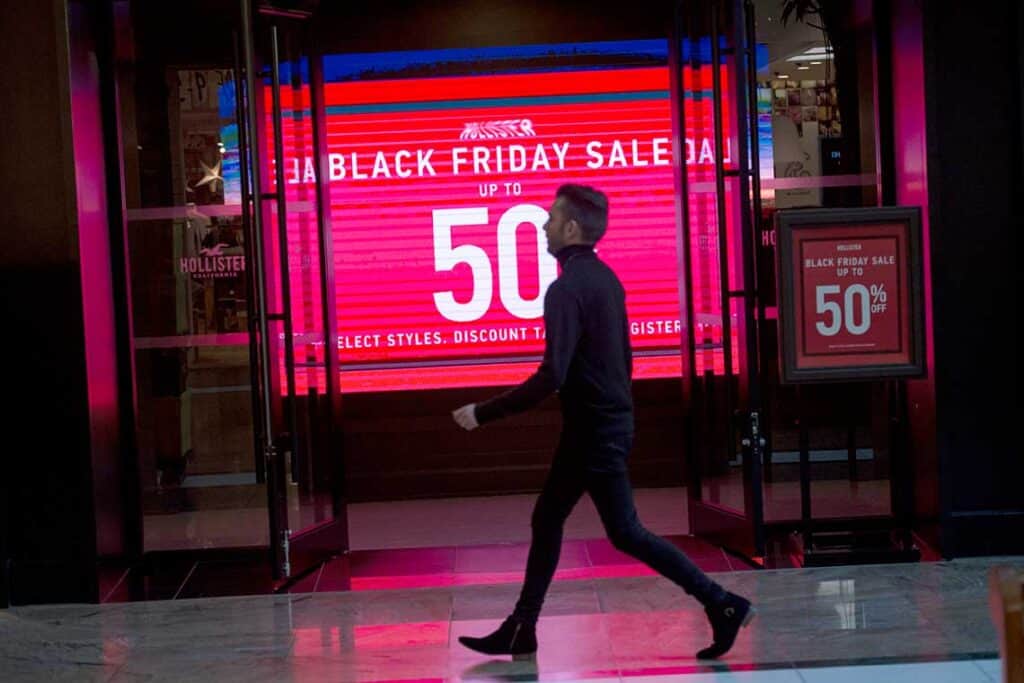

Consumers say that Black Friday and Cyber Monday are the best shopping events of the year for deals, according to recent research.
While Black Friday and Cyber Monday remain the dominant shopping events of the year, fewer consumers plan to shop them in 2020. Many of those who do plan to shop will do so online and expect retailers to offset any increased shipping charges, according to a new study by Simon-Kucher & Partners, a global strategy and marketing consulting firm, and Dynata, an independent market research institute.
Roughly 32 percent of consumers indicated they think Black Friday has the best shopping deals and 16 percent said they view Cyber Monday as the best opportunity for deals, compared to only 11 percent for Amazon Prime Day.
The study, based on a representative sample of more than 1,000 consumers across the US, suggests that despite the confidence in Black Friday and Cyber Monday deals, there is a 25 percent increase in the number of shoppers who have not yet decided or are not planning to shop either event as compared to last year.
This Year Black Friday Shopping Will Be Different
This year, consumers who plan to shop during Black Friday and Cyber Monday revealed that they are more likely to browse through available deals than shop for specific items.
Overall, 78 percent of consumers indicated they will browse available deals and 51 percent will be looking for specific products (as compared to 66 percent and 59 percent respectively from last year).
Additionally, as compared to last year, there is about a six percent increase in the number of consumers who will not be planning their shopping lists in advance of Black Friday and Cyber Monday. The majority of those who will be pre-planning their lists will do so one to two weeks before the events.
“With the pandemic leaving consumers pessimistic about their financial outlook, consumers are wary of committing to spending what discretionary income they have left,” said Hubert Paul, Director at Simon-Kucher. “While this means retailers need to be even sharper on their promotions, there could be significant cross-sell opportunities as consumers are browsing across categories they might not primarily be considering.”
In a Roku/Harris Poll survey, more than 60 percent of both 18–34 year-olds and 35–44 year-olds said they have less to spend on the holidays this year.
The youngest among are also the thriftiest, with teen spending hitting an all-time low in H1 2020, declining 9 percent year-on-year according to Piper Sandler’s annual teen survey.
Consumers Expecting Higher Discounts on Black Friday
About 52 percent of consumers said they expect Black Friday discounts of 25 to 50 percent off, whereas last year, only 44 percent of consumers expected discounts this high. For Cyber Monday, 21 percent of consumers said they expect discounts of more than 50 percent off, compared to only 12 percent of consumers last year.
While shoppers are hoping to find better deals this year, nearly 70 percent of consumers indicated they plan to spend the same amount as last year or more. More than 80 percent of Black Friday and Cyber Monday shoppers plan to spend $50 or more, while more than 30 percent expect to spend $200 or more.
“It might not be all doom and gloom for retailers,” said Mr. Paul. “Strategically engaging and connecting with consumers with messages that resonate can still lead to similar results as last year, albeit requiring more consumers to spend to offset the higher discounts.”