A Shenzhen Textile Fair Helps Showcase Fabrics and Trims
Southern China finally got the textile trade fair it’s been waiting for. Despite the region’s heavy involvement in apparel sourcing, there has not been a comprehensive exhibition for sourcing fabrics and trims.
The recent Intertextile Shenzhen (Nov 6-8) changed that.
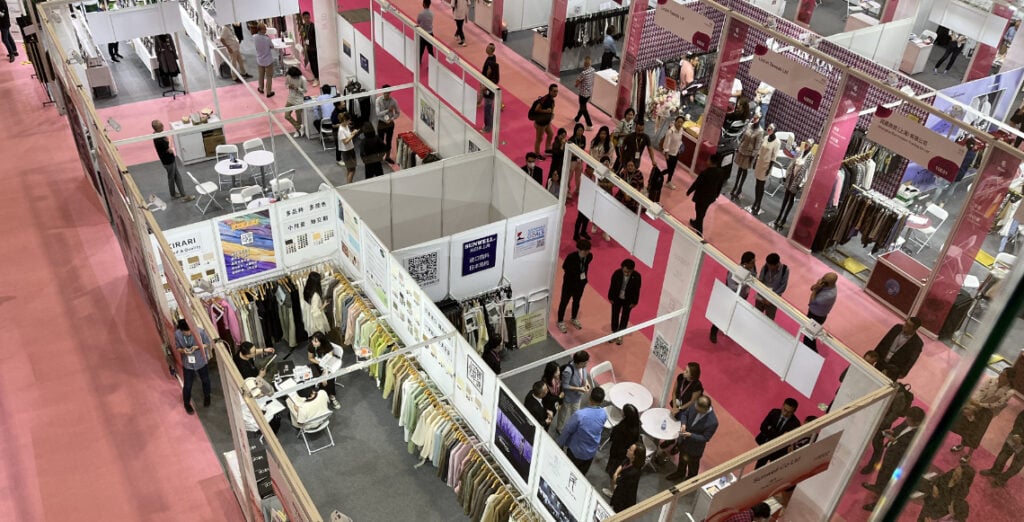
Manufacturers and buying offices in the Greater Bay area had easy access to a fair that showcased a comprehensive selection of Chinese fabrics, with a complement of materials from other Asian nations.
A real bonus for fair attendees was the venue – the Shenzhen World Exhibition Centre – which is well organized and easy to work. That the metro stops just in front of the entrances to the fair is one more reason to give this venue a thumbs up!
“We met some good customers here. This is a chance to sell to China since local brands are buying,” said Rina Yoheva, Business Development Manager from Winnersumbiri Knitting Factory (Indonesia). “There is a big opportunity here since China is a growing market.
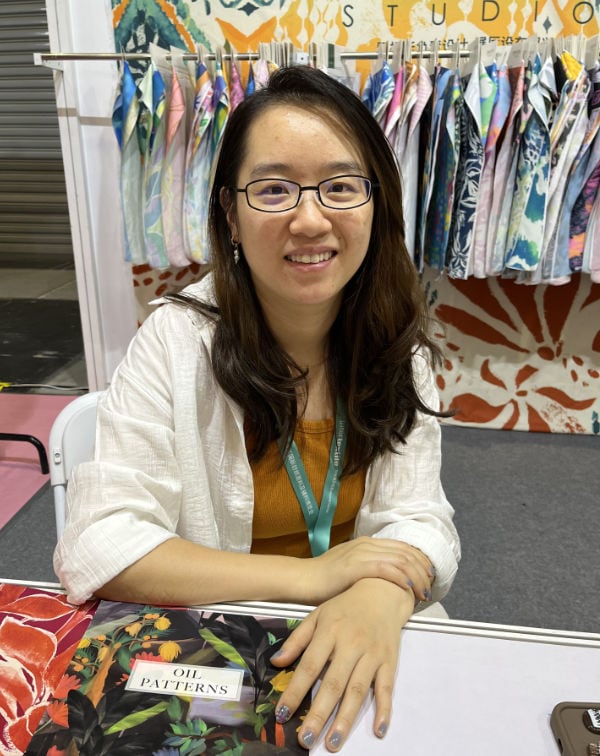
Ruby Li at Pehuen Studio
Juno Ha, general manager at Haesol (Korea)
The Quest for Clients
The fair saw steady traffic, although orders were disappointing due to overall weak global demand. As has been the case all year, brands are reluctant to place orders when they are uncertain of what consumer demand might look like in the coming season.
At Haesol (Korea) Juno Ha said business was slow. “We’re just starting to export. It’s not easy to find international customers,” he added.
In contrast, Jay Mo, general manager at Xin Fei Li (China), said “Business is good. A bit quiet, but overall it’s good.” His company manufactures custom-made lace and embroidery for intimate apparel and outerwear. They have their own development team, workshop and factory.
“The EU market is very good right now and so is the China market. Orders from other Asian countries are also improving,” he said.
The Shenzhen Exhibition & Convention Centre was a visitor-friendly venue that combined exhibitor halls with outdoor space.
Rina Yoheva, Business Development Manager from Winnersumbiri Knitting Factory (Indonesia)
Show Me The Money
The biggest challenges that most fabric mills said they faced included price pressure since brands wanted to bring in products at lower price points to compete for tighter consumer wallets. “Price is a big challenge. Customers want better quality, but they also want lower prices,” said Mr. Mo at Xin Fei Li.
“We’re investing in more R&D for underwear and active sports in order to make our products more competitive,” said Ms. Yoheva at Winnersumbiri.
Also a strong dollar was making raw materials more expensive for suppliers.
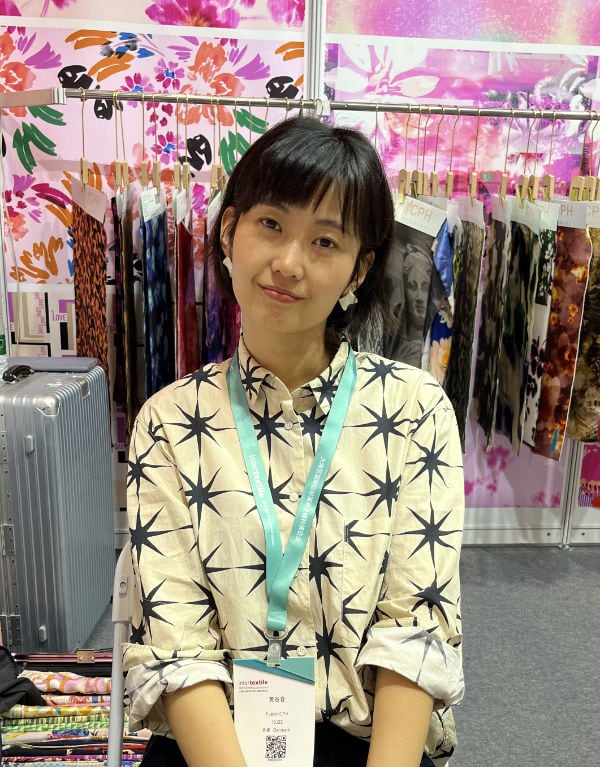
Business in China was down from last year, according to Willa Huang at Fusion CPH (China). “People are reluctant to spend. They hold their pockets very tight right now,” she said.
Willa Huang at Fusion CPH (China)
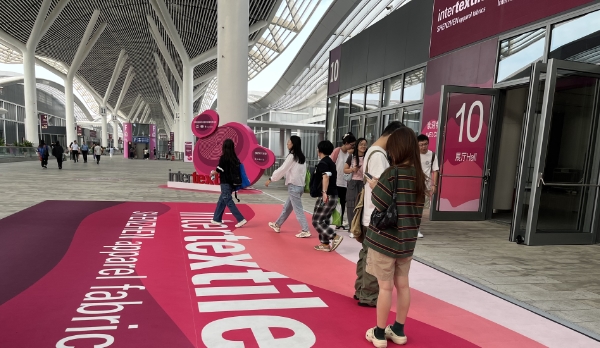
A splash of vibrantly colored signage welcomed visitors to the fair
Hazy Forecast
Looking to 2024, mills were hesitant to speculate on what the new year might bring. The overall consensus was that business would be about the same as this year. “There are too many geopolitical problems now,” said Ms. Huang. Ms. Yoheva agreed. “The market seems to be improving but the geopolitical situation is a concern,” she said.
“We’re not sure about next year. We’re just being cautious,” said Sinia Sun who was representing Fioribelli (Italy). “This has been a tough year. I am looking to find new customers and am hopeful that this will help the business to turn around.”
“Many smaller companies will disappear because they don’t have enough orders. Right now, there is not enough business to support all of the suppliers. Those that are left will do better because there will be less competition,” said Ruby Li at Pehuen Consulting.